
5 Minimalist Browser Games That Look Just Like Spreadsheet Software: Targeting Stealthy Browser Games
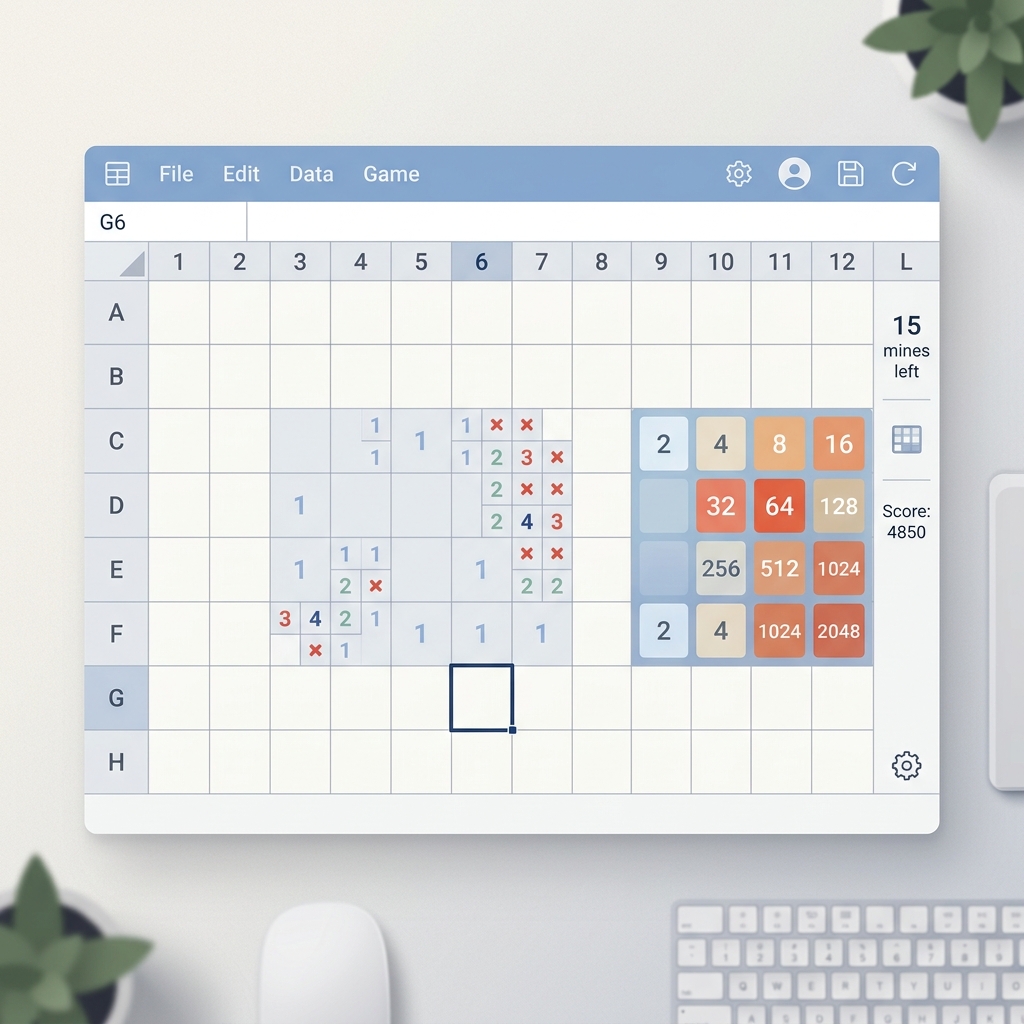
There is a very specific kind of game that feels almost invisible at first glance. It opens in a browser tab. It uses clean white space. It relies on grids, numbers, tiny icons, and quiet logic instead of loud colors or flashy menus. If somebody walked past your screen for a second, they might assume you were staring at a spreadsheet, cleaning up data, or pretending to be productive while actually doing something much more fun. That is exactly why minimalist browser games have become such a strange little favorite for people who like stealthy browser games.
The appeal is not just that these games are easy to play. It is that they fit into the visual language of work, study, and ordinary browser tabs so naturally that they almost disappear into the background. They look calm. They look tidy. They look harmless. But once you start playing, you realize they can be just as absorbing as a much louder game. The difference is that they wear a quiet disguise.
That is what makes this category so enjoyable. Minimalist browser games do not need neon graphics or giant characters to be addictive. They do their work through structure, pattern, and repetition. They often use grids that feel like cells in a spreadsheet. They use clean interfaces that could pass for a tool someone forgot to close. They invite you in with simplicity and keep you there with a surprisingly sharp gameplay loop.
This guide focuses on five minimalist browser games that look just like spreadsheet software, or at least close enough that they fit beautifully into the idea of stealthy browser games. These are the kinds of games that let you enjoy a quick break without drawing too much attention, while still giving you real gameplay value. They are calm on the surface, but they can be quietly intense once you start trying to improve.
Why minimalist browser games feel so stealthy
The phrase stealthy browser games might sound playful, but it captures something real. Some browser games are loud by design. They use bright animations, giant buttons, and obvious action. Minimalist games do the opposite. They blend into the environment. Their visual style is restrained enough that they can resemble a utility or a document rather than a game.
That makes them interesting for a few reasons:
- They look professional: The UI often resembles a tool or spreadsheet.
- They are easy to open quickly: No huge launch sequence is needed.
- They fit short sessions: A few minutes is often enough.
- They are less visually distracting: That can make them feel calmer.
- They still offer real challenge: Minimal design does not mean simple gameplay.
For a lot of players, that combination is ideal. You get the comfort of a neat, quiet interface, but underneath that calm exterior is a puzzle, a strategy system, or a small challenge that can quietly take over your attention.
What makes a browser game look like spreadsheet software?
Not all minimalist browser games look like spreadsheets, and not all spreadsheet-looking games feel good to play. The best ones tend to share certain visual and structural traits.
- Grid-based layouts: Rows and columns immediately create that spreadsheet feeling.
- Limited color palette: Muted colors make the interface feel understated.
- Small text and numbers: These details can make the game feel like a work tool.
- Clean borders and boxes: Thin lines and structured cells reinforce the look.
- Simple controls: You often click, tap, or use a few keys.
- Low visual noise: The game stays focused and neat instead of cluttered.
These games can be surprisingly immersive because they make your brain work a little harder to extract the fun. They are not trying to impress you with spectacle. They are trying to become compelling through design clarity.
The five minimalist browser games that look just like spreadsheet software
Below is the main list. Each of these games has a clean browser-first feel and a visual style that can easily pass as work-related software if someone glances at your screen too quickly. That is the charm. They look quiet, but they are often much more absorbing than people expect.
1. 2048
2048 is probably the most famous minimalist browser puzzle game in this category, and for good reason. The entire game is built on a simple grid of numbered tiles. You move the tiles, combine matching numbers, and try to reach the 2048 tile. On the surface, it looks almost suspiciously close to a spreadsheet. It has clean boxes, tidy numbers, and a layout that feels like a column-and-row exercise more than a game at first glance.
Why it fits the stealthy browser games idea:
- The grid looks like a tiny data table.
- The colors are minimal and soft.
- The interface is so simple that it barely announces itself.
- It is easy to play in very short bursts.
The beauty of 2048 is how fast it becomes mentally sticky. One move leads to another, and suddenly you are trying to manage the whole board like it is a puzzle with tiny business-like cells. It feels organized, but the challenge slowly grows until you are deeply engaged. That makes it one of the best examples of a browser game that looks like spreadsheet software while hiding a surprisingly addictive loop inside.
It also has strong quick-break energy. You can play for two minutes and stop. You can also get pulled in for much longer if the board starts going well. Either way, the visual disguise stays intact. It is one of the cleanest stealthy browser games you can find.
2. Minesweeper
If any game deserves the title of “spreadsheet in disguise,” it is Minesweeper. The interface is famously boxy, the grid is perfectly structured, and the entire experience is built around clicking cells that look like they could belong in a workbook if you did not know better. It is one of the most classic stealthy browser games ever created.
Why it fits the spreadsheet-software look:
- The game is almost entirely grid-based.
- The numbers appear in neatly arranged cells.
- The visual style is extremely functional.
- It looks like a work utility until you realize it is a puzzle.
Minesweeper is also one of the best examples of a game that becomes more interesting the more you understand it. At first, it feels like a guessing game. Then it becomes a logic game. Then, if you stick with it, it becomes a rhythm game of careful decisions and pattern recognition. That progression is part of what makes it so satisfying.
There is also something charmingly old-school about it. It feels like it belongs in the background of a desktop. That is not a weakness. In fact, it is one of the main reasons it works as a stealthy browser game. It can sit there looking plain and harmless, while your brain slowly becomes fully invested in the board.
For people who want a browser game that looks almost exactly like a spreadsheet and still offers a real challenge, Minesweeper is an easy recommendation.
3. Sudoku
Sudoku is another natural fit for the spreadsheet-like browser game category because it uses a clean grid, lots of empty cells, and a design language that feels more like structured data than flashy entertainment. If somebody sees Sudoku open in a browser tab, they are just as likely to assume it is a logic exercise as a game. That makes it a very good stealthy browser game.
Why it works so well:
- The layout is neat and grid-based.
- The numbers create a strong spreadsheet association.
- It feels focused, quiet, and tidy.
- It can be played in short or long sessions.
Sudoku is a particularly good fit for people who like games that feel mentally satisfying without being loud about it. The goal is simple in theory but deeply engaging in practice. Fill every row, column, and box with the correct numbers. The calm structure makes it look almost bureaucratic, which is part of the joke and part of the appeal.
Unlike more action-heavy browser games, Sudoku does not need to announce itself. It quietly asks for your attention and then rewards it with a sense of order. That makes it one of the best stealthy browser games for players who want a puzzle that feels organized rather than chaotic.
The spreadsheet comparison works especially well here because the game has that same grid discipline. Rows matter. Columns matter. Placement matters. It is all about structure, and that structure is exactly what gives the game its calm disguise.
4. Nonogram browser games
Nonograms, sometimes called picross or griddlers, are another excellent match for this topic because they look almost exactly like a data table before the picture starts to emerge. The interface is usually a set of clean squares, row clues, column clues, and a board that looks like it was designed by someone who absolutely loves neat alignment. It is one of the stealthiest browser game formats out there.
Why it fits the theme:
- The layout strongly resembles a spreadsheet or planning sheet.
- It uses tidy rows and columns.
- The interface is understated and practical.
- The game is quietly creative underneath the clean design.
What makes Nonograms especially satisfying is the reveal. You begin with a blank-ish grid that feels analytical and precise. Then, slowly, the hidden image appears. That moment is always a little delightful. It turns the whole thing from a plain-looking logical grid into something expressive without ever abandoning its minimalist appearance.
This is one of the strongest examples of a browser game that can sit in a tab like a workflow tool but still turn into an immersive puzzle. It is a great choice for anyone who likes games that reward patience and pattern recognition. It also works well for short breaks because you can often solve a small section, close the tab, and come back later without losing the thread too badly.
If you are specifically looking for minimalist browser games that look just like spreadsheet software, Nonograms deserve a very high spot on the list.
5. Hexcells
Hexcells is probably the most elegant entry on this list because it takes the grid idea and makes it feel extremely refined. The board is minimalist, the clues are sparse, and the entire interface has that calm, structured appearance that makes it feel closer to a data analysis screen than a typical browser game. If you want a stealthy browser game that looks tidy and sophisticated, Hexcells is a perfect fit.
Why it belongs here:
- It uses a clean grid with restrained visuals.
- The puzzle logic is precise and elegant.
- It looks almost like a professional visualization tool.
- It has a quiet, almost meditative feel.
Hexcells is one of those games that does not need to shout to be memorable. Its beauty is in the balance between simplicity and depth. The minimal presentation creates a sense of calm, but the puzzle underneath that calm can be surprisingly demanding. You are constantly making deductions, scanning patterns, and piecing together logic from very little information.
That is exactly why it fits the spreadsheet-software aesthetic so well. It looks like something a person might open for work, but in reality it is a carefully designed logic puzzle. It is sleek, discreet, and excellent for players who like thoughtful games with a polished appearance.
Why these games work so well as stealthy browser games
What all five of these games share is a visual discipline that makes them feel understated. They do not rely on dramatic menus or busy animations. They rely on layout, logic, and the kind of clean structure that lets the gameplay speak for itself.
That has a few nice benefits:
- They feel private: You can play without the screen looking like a giant neon arcade.
- They are easy to revisit: Simple interfaces are easy to return to later.
- They suit short sessions: A few minutes is often enough to feel progress.
- They can be mentally refreshing: Their order and clarity can feel calming.
- They often disguise their depth: The minimal look hides how engaging they are.
A lot of people assume minimalism means less fun, but these games prove the opposite. The stripped-down look often makes the challenge more focused. There is less visual noise, so your attention goes straight to the actual puzzle or pattern. That can be very satisfying.
Best stealthy browser games by mood
Different players use these games for different reasons. Some want a short logic puzzle. Some want a calmer challenge. Some want a game that feels almost invisible on a screen. Here is a simple way to choose based on mood.
If you want the most spreadsheet-like game
Choose:
- Minesweeper
- Sudoku
- Nonograms
These have the strongest grid-and-cells look.
If you want the most addictive quick-break puzzle
Choose:
- 2048
- Hexcells
These are ideal when you want short but focused play.
If you want something that looks like a work tool
Choose:
- Hexcells
- Sudoku
- Nonograms
These games have especially clean and restrained interfaces.
If you want the easiest game to explain
Choose:
- 2048
- Minesweeper
These are simple enough for almost anyone to understand quickly.
A practical list of the five minimalist browser games
If you want the short version, start here:
- 2048 — a clean tile-merging puzzle that looks like a tidy data grid
- Minesweeper — the classic spreadsheet-disguise puzzle with numbered cells
- Sudoku — a structured number grid that feels calm and organized
- Nonograms — a logical picture puzzle with a clean spreadsheet-like layout
- Hexcells — an elegant minimalist puzzle with a polished data-table feel
If you only want one or two to begin with, Minesweeper and Hexcells are probably the most convincing examples of stealthy browser games that look like spreadsheet software.
Why minimalist browser games are still worth playing
There is a special kind of comfort in games that do not demand attention by force. Minimalist browser games earn your focus instead of grabbing it. They let you settle in, think a little, and enjoy the quiet satisfaction of solving something neat and contained.
That is why they are so effective as quick-break games, and also why they can stay interesting much longer than their appearance suggests. They are calm, but not shallow. They are simple, but not empty. They look like tools, but they behave like puzzles.
For many players, that is exactly the sweet spot. You can enjoy a stealthy browser game without feeling like you are being loudly entertained. Instead, you get something more subtle: a clean interface, a satisfying logic loop, and the pleasure of making progress inside a design that feels almost invisible.
Final thoughts
5 minimalist browser games that look just like spreadsheet software have a strange and wonderful appeal. They are the kind of stealthy browser games that make you look busy while secretly giving your brain something much more interesting to do. They sit quietly in the browser, they use grids and numbers with almost suspicious elegance, and they invite you into a puzzle without making a big show of it.
If you want the most spreadsheet-like experience, Minesweeper and Sudoku are obvious standouts. If you want a clean puzzle that can eat a few minutes in the best possible way, 2048 is a classic. If you want something more elegant and analytical, Nonograms and Hexcells are excellent choices.
The nice thing about this category is that it does not try to be loud. It does not need to. The games are already compelling because of how thoughtfully they are built. They look like office work. They feel like calm logic. And then, once you start playing, they quietly become the thing you actually want to keep open.